Blog Archive

Thursday, July 20, 2017

Marvel Reboot Designer's Notes - Captain America

Captain America
No Damned "Hail Hydra" Here!
     Today we cover one of the characters who deviates in biography from the mainstream version of the character, but build-wise remains fairly true to his roots: Captain America.
     Everyone knows his origins: a 95 lb. asthmatic from Brooklyn who wanted to do the right thing for his country was selected for an experiment in creating a "super-soldier", gaining a shield and wearing a suit based on the American flag.  From the beginning in Captain America Comics #1, published in March of 1941 (long before the United States joined World War II; I need to edit the entry with the correct date), Cap has stood for the best of American values.  Not to turn this into a political rant, one of the things that worries me is that the writers are unable to recognize what those values are.  (Personally, I feel it best to make Cap a more moderate or centrist character than pulling him to one extreme or the other, admittedly an unwelcome viewpoint in today's highly polarized political climate.)
     Captain America underwent a personality shift in the 1950s, becoming more jingoistic.  This is perhaps why in Avengers v1 #4 (cover date March 1964), Marvel decided to retcon Cap's post-war appearances altogether into being others who had taken on the identity in his honor, having Cap revive from being frozen in ice since 1941.  Due to the sliding time scale, Cap's gone from being frozen in ice 19 years ('45 to '64) to currently 57 years ('45 to 2002, "fifteen years ago").  Of course, once every other decade or so someone at Marvel decides to remove the super-soldier serum from his body, causing it to break down and age to his "true" age; one of these days they'll realize he should be dead next time they pull that (but even then I don't doubt he'll "get better"; he's died once already, after all, and came back).
     In the Reboot, perhaps the one thing that's confused people a lot is why I have Captain America not frozen in ice.  It seems like a trivial thing, right?  Let's just say that I saw storytelling potential with a Captain who instead of skipping past the last 70 years had lived through it all, aging very slowly compared to everyone else, and was living in relative obscurity as a high school history teacher (ironically at the same school Spider-Man and his classmates attended).  Since he lived the time, did he marry Peggy? (I decided "yes".)  Did they have kids? (I figured they had a son, named after Bucky.)  Where were Peggy and the kid(s) now?  Did Cap outlive them?  (I decided to have Peggy die and the son MIA during 'Nam.)
      Most importantly, what was Cap's current mental state?  Steve's oldest still-active friend - Namor, King of Atlantis - probably has little time for reminiscing, having a nation to run, and most of his other wartime friends are probably getting on in age, if they're still around.  ("I'm ninety years old; I'm not dead." - Captain America: The Winter Soldier)  Cap's wife has been dead for decades, and his son missing in action and presumed dead almost as long.  Most of his old war enemies are no longer around to harass him, though I decided that their grandkids are holding onto those grudges, which provides the impetus to pull a somewhat disconnected Cap back into action.
     This also lets me play with one of my "original" characters, a version of Bucky unrelated to any of the others who have held the name: Rikki Buchanan, a Hispanic girl from his class who takes it upon herself to be his sidekick in order to get him out into the world.  (I based Rikki partially on the Heroes Reborn Rikki Barnes, Bucky Barnes' granddaughter from the alternate timeline created by Franklin Richards, but other than the similarity in names she's an original.)


Defining "Peak Human" Abilities

     In the Reboot, I have it set up so that DX, IQ, and HT cap at 15 for characters who are not considered "superhuman" in those regards; ST caps a little higher, at 23 (for a two-handed lift of 800 lbs, which the Marvel Handbooks have traditionally defined as "peak human strength", shared by Captain America and Black Panther, among others).   Steve isn't exactly superhuman, so I figured his DX and HT should cap at 15 due to the effects of the serum, and then I increased his DX to 16 due to experience and muscle memory.  I put his IQ at 12 not because he's of above-average intelligence, but because his experience makes many IQ-based rolls easier for him.  (A good comparison would be Kup from the animated Transformers: The Movie: pretty much everything reminds him of something else.)
     Cap's other serum-based abilities are Double-Jointed, Extended Lifespan 3 (x8), and Rapid Healing.  Nearly everything else on his sheet is a result of training.


The Shield

     As far as being a thrown weapon, Cap's shield is designed as an oversized discus, stats for which appear in GURPS Martial Arts and GURPS Low-Tech, and adjusted for a discus designed for an SM +2 creature using the scaling rules in GURPS Low-Tech Companion 2: Weapons and Warriors.  After that, I looked to determine which material modifiers to give it: Cap's shield has been described as being made of Vibranium or an indestructible Vibranium-steel or Adamantium-Vibranium alloy.  For my purposes, I had to define a number of common technologies in the Reboot Universe, noting that Adamantium and Vibranium are normally mutually exclusive modifiers.  In this case, I ignored that (self-imposed) rule and hit it with both, as it possesses the properties of both materials: practical invulnerability and the ability to absorb vibrations including impacts.
     I could have defined the shield as a series of advantages with Gadget modifiers, but I really really really dislike statting up equipment usable by anyone as a set of advantages.


Thursday, July 13, 2017

Marvel Reboot Designer's Notes: Ant-Man

The Astonishing Ant-Man
     Hank Pym.  Scientist.  Engineer.  Inventor.  Mentally unstable.  Reputed wife-beater.  Has had six heroic identities: Ant-Man, Giant-Man, Goliath, Yellowjacket, Doctor Pym, and the second Wasp (when Janet was dead... long story).  Also (in the comics, not the MCU everyone seems more familiar with) the creator of Ultron, and was once acknowledged by the cosmic powers as Earth's Scientist Supreme - because he achieves through science what should be scientifically impossible (though Loki later claimed to have been impersonating Eternity, remember that this is Loki; nothing can be taken at face value where he's concerned).
     One of the things I wanted to do with the Reboot was to redeem Hank.  Despite it being acknowledged as an artist misunderstanding the writer's intent - Hank was supposed to flail about and accidentally hit Janet, which turned into a full-on send-her-flying backhand - Hank has never been been able to lose the stigma of being an abusive husband.  (This later crept into the Ultimate Marvel imprint which got quite graphic in his abuse of Janet, right down to a can of bug spray!  I'm sorry, I never did like the Ultimate Marvel imprint, and this is just a minor example why.  Except for in the Spider-Man titles, everyone was either a sociopath or too dysfunctional to live!)
     So, the first thing I did was to reset the clock.  Back when he was introduced in 1961 (Tales to Astonish v1 #27, cover date January 1962, probably published in September '61), even before taking on the Ant-Man identity, Pym was a bachelor; Janet hadn't yet been introduced. Mainstream!Hank is divorced from Janet, Ultimate!Hank started off married to herI turned the clock back only slightly; Reboot!Hank
     The next thing I did was to make him much less mentally unstable.  In the comics, he's suffered from schizophrenia (which is why he became Yellowjacket in the first place), though that didn't happen until '68 as the Silver Age was beginning to give way to the Bronze Age.  Mine just suffers from an inferiority complex; he's constantly holding himself up to folks such as Reed Richards, Tony Stark, and Dr. Doom, and seeing himself come up short.  In many ways, this is a callback to his time between Yellowjacket and Doctor Pym, Scientific Adventurer, from the early West Coast Avengers.  This could make him (or anyone for that matter) slightly irritable at times.
     Although it's his longest-lasting identity, as he keeps coming back to it, I don't think I'll make him Giant-Man just yet, if at all.  In the comics, he was turned into Giant-Man by the writers because the artists kept forgetting visual cues to his reduced height, so that he didn't appear to be any different from anyone else in a skin-tight bodysuit; from an in-universe perspective, he became Giant-Man because he felt inadequate next to Hulk, Thor, and Iron Man.
     In the comics, he started out as a chemist; I've turned him into a physicist because of the nature of the "Pym Particles" used.  He's one of the best multidisciplinary scientist/inventors on any Marvel-Earth, really second only to Reed and Doom.

Defining the "Pym Particles"
     The following is pure "rubber science", if not outright "superscience".  The key here is not to get the science 100% correct, but to make sure that it is not blatantly wrong!  I am trying to keep it plausible and internally consistent, not necessarily scientifically accurate.
     The size-changing powers in the Marvel Universe are all attributed to the interactions of a sub-atomic particle known as the "Pym Particle".  This particle interacts with matter to permit access to a sidereal aspect of the universe where mass is "virtual" or "potential".  This sidereal aspect can also be used to add mass to an object, increasing size and/or density.
     Because of this, mass shunted to the sidereal dimension is stored as virtual or potential mass rather actual mass, and is still tied to the object it was originally a part of.

A Full Set of Size-Changing Powers
     Ant-Man has two main powers: the ability to shrink down to 1/2 inch size while retaining his full strength, and the ability to converse with ants and other "higher" insects (such as bees) via a cybernetic helmet; he also had the shrinking powers as Yellowjacket and Wasp.  As Giant-Man and Goliath he can grow to about 250 feet tall, with a proportionate increase in strength, though his usual combat size tended to be in the 10 to 25 foot tall range.  As Doctor Pym, he was able to cause objects he was touching to grow and shrink.  What follows are write-ups for some of the abilities I came up with for Pym and others who had similar abilities.

Size Reduction
12/27/43/57/77/92/114/130/156/173 points for levels 1-10
     This ability allows you to reduce your size by one Size Modifier per level while retaining your full HP and damage capability.  Normally you can carry up to your light encumbrance with you.  The shift takes only a second.

Statistics: Shrinking 1 (Can Carry Objects: Light Encumbrance, +20%; Full Damage, +100%; Full HP, +30%; Super, -10%) [13]. Level 2 adds "Variable, +5%" and "Reduced Time 1, +20%" [27]. Every two levels after adds another level of Reduced Time (+20% per level).

Shrink Object
45 points at level 1, +5 points per each additional level
     This ability allows you to shrink an object up to the SM difference specified by the level of the ability. The objects shrunk by this ability remain that way indefinitely until you specify otherwise.

Statistics: Affliction 1 (HT-0; Accessibility (Not On Living Beings), -20%; Advantage (Shrinking 1), +50%; Cancellation, +10%; Extended Duration: Permanent, +300%; Low Signature, +10%; Melee Attack: Reach C, -30%; Persistent, +40%; Super, -10%) [45]. Each additional level adds another level of the Advantage (+5%) [+5 points per level].

Giant-Man
94/191/267/349/440 points at levels 1-5
     You are able to grow in size. Each +1 to SM is accompanied by an increase in not only size but also ST, DR, and Injury Tolerance (Damage Reduction).  In a more "realistic" game, the fourth level (roughly 10 yards/30 feet tall) will be the maximum level before the character becomes unable to support his weight under an Earth gravity, due to the Square-Cube Law.

Statistics: Growth 1 (Super, -10%) [9] plus Extra ST +5 (Growth Size, -10%; Super, -10%) [40] plus Injury Tolerance (Damage Reduction /2; Super, -10%) [45].  Each level adds one level of Growth [+9/level].  In addition, at level 2 increase IT:DR to /3 [68] and increase Extra ST to +15  with Growth Size (-20%) [105]. Level 3 increases IT:DR to /4 [90], and Extra ST to +25 with Growth Size (-30%) [150].  Level 4 increases IT:DR to /5 [113], and Extra ST to +40 with Growth Size (-40%) [200].  Level 5 increases IT:DR to /10 [135], and Extra ST to +65 with Growth Size (-50%) [260]. Greater sizes are available; increase IT:DR to the next level, and increase Extra ST, with a final ST score calculated by taking 5 times (the final height in yards) and subtracting 10.

     I have to be honest; I haven't yet given Reboot!Ant-Man more than the Size Reduction ability.  I built the others for a Hank Pym expy character I played in a game (which ended after two sessions when the GM decided to start world-building mid-session than running the plots, because he objected to a player OOCly using "google" as a verb because it didn't fit his "throw out your frame of reference" vision...).

Super-Normal Traits
     Even without his powers, Hank would be an excellent super-normal scientist/inventor.  This was most apparent in his "red/purple jumpsuit" days as "Doctor Pym, Scientific Adventurer", and also came into play during his time as the second Wasp.  For the Reboot, I've maintained his invention ability, giving him Artifice Talent 4, Gadgeteer (though not Quick Gadgeteer), and Inventor!-16 (with a note for a conditional +4 from Artificer; it's not RAW, according to Power-Ups 7: Wildcard Skills, to combine Talents and Wildcard skills like that, but I haven't found it to break anything by permitting Talents to have conditional bonuses.

Thursday, July 6, 2017

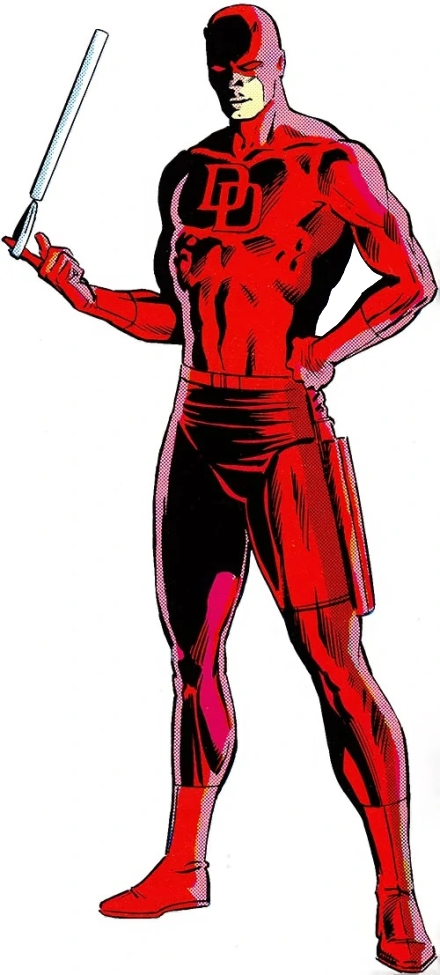
Marvel Reboot Designer's Notes: Daredevil

Daredevil - The Man Without Fear
     Always in Spidey's shadow, coming in second to the wall-crawler, even on my blog. :)
     Seriously, however, Daredevil presents a challenge to stat up, in that no two creative teams can agree just how his "radar sense" works.  In some instances, it's akin to a passive sonar, in others it seems like actual radar; yet in others it's regular "vision", but in either black-and-white or in color.  One creative team went so far as to permit him to view photographs and projected images, when most others - and every instance in the Official Handbooks of the Marvel Universe from 1984 to present - have said he cannot view such images.  On top of all that, regardless of how his radar sense works, he has his other enhanced senses: hearing that can listen to heartbeats and breathing as a kind of truth detector, fingers sensitive enough that can read regular type print (not just braille), and the ability to sift through the various different odors in the air (for example, to tell what someone had for breakfast that morning).
     So, clearly a judgement call has to be made after sifting through the various methods depicted, and this call is not going to please everyone, as everyone has their own ideal version of DD.

Daredevil's Power Set
     In order to recap from the Reboot entry, Daredevil possesses the following traits:
          Catfall (Biological, -10%) [9]
          Discriminatory Hearing (Passive Biological, -5%) [15]
          Discriminatory Smell (Emotion Sense, +50%; Passive Biological, -5%) [22]
          Discriminatory Taste (Passive Biological, -5%) [10]
          Para-Radar (Extended Arc: 360°, +125%; Super, -10%) [86]
          Parabolic Hearing 3 (Passive Biological, -5%) [12]
          Perfect Balance (Passive Biological, -5%) [15]
          Sensitive Touch (Stethoscopic, +50%; Ultra-Fine, +30%; Passive Biological, -5%) [18]
          Vibration Sense (Passive Biological, -5%) [10]
          Blindness [-50]
      Note that these do not include his combat training.
      I used Passive Biological (-5%) on most of his stuff to indicate that various pharmaceuticals can be developed to disable these powers.  Biological (-10%) is used on Catfall, which in addition to the pharmaceuticals knocking them out he indicates he has to spend 1 FP per use.  (Given how he's been known to fail to land properly when winded (suffering from a loss of FP due to prolonged combat and other feats), it seems to make sense.)

      Now, by the RAW, Blindness (p. B124) gives -6 to all combat skills, which is in essence a "darkness penalty" for total darkness but bought off slightly by those who have the disad a while (indeed, the text for the disadvantage states that if you acquire it suddenly, you're at -10 as if in total darkness).  However, the text for Scanning Senses (which includes Para-Radar, a kind of undetectable radar; p. B81) says that since it doesn't have anything to do with sight one can ignore darkness penalties when using it.  This is complemented by his Vibration Sense.
     Honestly, his enhanced senses were easier to determine than his radar sense.

    Now, I recently got hold of a copy of GURPS Powers: Enhanced Senses.  I'm going through it to see how his abilities should work out, and will probably revise the power set in the future.

Why a District Attorney?
      When I started work on Matt Murdock (rather than his heroic vigilante alter ego of Daredevil), I had the idea that Matt would be working to protect the innocent (as he has always done) in the sense that he'd be working in the legal system to not only keep the falsely accused innocent from prison but also help put the guilty behind bars.  He can't really do that as a defense attorney, as he'd only be involved with the bad guys in civil cases.  However, working in the NYC District Attorney's office as a prosecutor would work.  Keeping Foggy as a defense attorney was easy; as a Public Defender, he could easily be working opposite sides of the case from Matt, which in itself can lead to some nice courtroom drama scenes - particularly if Matt's being forced by his bosses to prosecute the wrong person.
     So what about Nelson & Murdock, Attorneys-at-Law?  Part of me is thinking that the two are considering it in the backs of their minds, but the idea that the bulk of their client base would be civil suits and pro bono cases assigned by the court just doesn't seem to fit the title as yet.

Wednesday, June 28, 2017

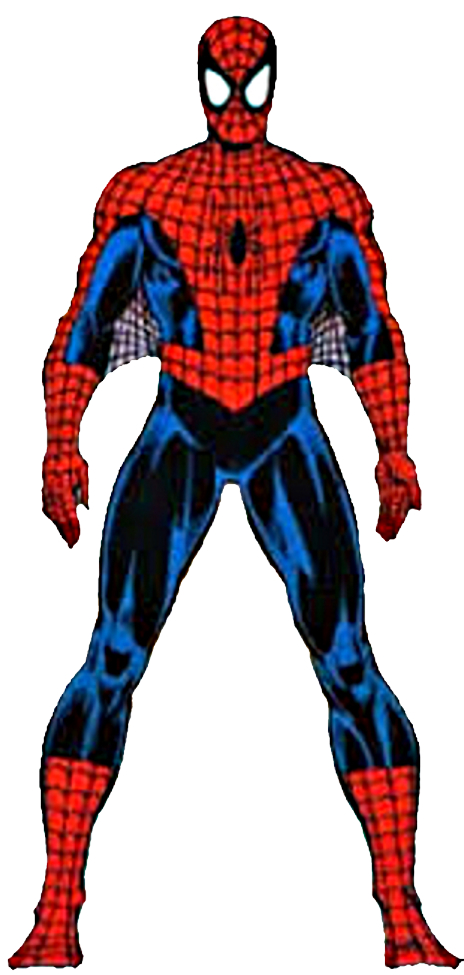
Marvel Reboot Designer's Notes: Spider-Man

     As many of the regular followers of this blog know, I'm working on a GURPS Marvel Comics Reboot project on the side, which has been going on for the past 10 years.  (I started in '07; has it really been that long?)  Today, I begin work on a series of Designer's Notes for various characters in the Reboot, starting with our friendly neighborhood Spider-Man!
Our Friendly Neighborhood
Spider-Man
     The biggest complaint I receive emails about for Spidey's Reboot is "how dare I make Pete a college student!  He's supposed to be a high school teenager!"
    First, with the exception of the Ultimate Marvel imprint and various other media Pete hasn't been in high school in the comics since the mid-1960s!  At the time I read his titles - during the height of the comics craze from the mid-'80s through mid-'90s, when he had four concurrent titles (Amazing Spider-Man, Spectacular Spider-Man, Web of Spider-Man, and Spider-Man) - Pete was a college graduate student pursuing his Masters of Science degree in Chemistry at Empire State University (Marvel's fictitious university on the south end of Manhattan) and married to Mary Jane, who was expecting their first child (a daughter they named May after Pete's Aunt May).  Gwen had died in '75 (an action nearly universally held as the start of the Bronze Age of Comics).
     It's only the Ultimate Spider-Man titles and the movies put out post Spider-Man 3 that have him still in high school.
     In my case, I cannot relate to a high school aged Spider-Man.  It's been far too long since I was in high school (late '80s), and as I said the Spider-Man I know and love was an adult.  I also realized that making Pete a graduate student would alienate the fans who see him as a perpetual teenager.  So I split the difference: I made him a college freshman, just out of high school, and new to his powers.

Defining Spider-Man's Powers
     Speaking of his powers, everyone knows Spider-Man's origins: bit by a radioactive spider, he gains the proportionate strength, speed, and agility of a spider.  There's just one problem with that situation, which please permit me to paraphrase Futurama:
RADIATION DOES NOT WORK LIKE THAT!
     Ahem, sorry.
     There have been different attempts to explain Spidey's powers in the comics and movies that recognize this aspect, from the bite transmitting a genetic retrovirus that rewrote his genetic code to the bite conveying unto him the post of "champion of the spider totem".  For the Reboot, I've decided to take a page out of the Sam Raimi/Tobey Maguire Spider-Man movie trilogy and make the bite inject him with a genetic retrovirus which augmented his DNA.
     Spidey's classic power set is essentially as follows: Superhuman strength in the "10 ton lift" range, superhuman agility, the ability to stick to most surfaces the way most insects and spiders seem to be able to, and a "spider-sense" which enables him to sense danger just before it happens.  One lesser-known power is the ability to see bullets in flight, which is generally considered part of his spider-sense.  He is also generally more durable than most, given the beatings he often takes.  The Sam Raimi/Tobey Maguire movie trilogy also gave us the idea that his webbing was innate; most other depictions have him using mechanical web-shooters using a chemical formula he invented. I have chosen in the Reboot to go with the Raimi/Maguire explanation for the time being.
     To begin with, let's review what I have as his powers:

     Attributes: ST 22/112 [20*]; DX 12/18 [40†]; HT 12 [20]..
     Secondary Characteristics: Dmg 2d/4d (12d/14d); BL 97 lbs. (2,509 lbs/1.25 tons); HP 22 [0]; FP 20 [24]; Basic Speed 6.00/8.00 [0]; Basic Move 6/8 [0]; Brachiation Move 4 [0]; Dodge 9/15.
     Advantages: Binding (Webbing) 20 (Sticky, +20%; Super, -10%) [44]; Clinging (Passive Biological, -5%) [19]; Danger Sense (ESP, -10%) [14]; Enhanced Dodge 3 (ESP, -10%) [41]; Enhanced Time Sense (ESP, -10%) [41]; Extra DX +6 (Super, -10%) [108]; Injury Tolerance (Damage Reduction  /10; Limited: Crushing Attacks, -40%; Super, -10%) [75]; Perfect Balance (Super, -10%) [14]; Super Jump 2 (Super, -10%) [18]; Super ST +10/+100 (Super, -10%) [360].
     Perks: Climbing Line [1]; Swinging [1].

     * Includes +10/+100 from Super ST.
     † Includes +6 from Extra DX.

     Allow me to go into detail on a few items:
     First, his superhuman agility.  You'll note that I have his DX split, 12/18, resulting in his Basic Speed, Basic Move, and Dodge also being split (6.00/8.00, 6/8, and 9/15 respectively).  His Extra DX +6 has a power modifier (Super, -10%) on it, which means that in rare cases where his powers are negated he essentially still has an above-average DX score (12).  In the Reboot, I've decided to cap DX, IQ, and HT at 15 unless those traits are deemed to be "superhuman".  This makes Spidey's typical DX 18 effectively superhuman. Assisting in his superhuman agility are Perfect Balance and Enhanced Dodge 3, the latter of which enables him to most blows.
     For his superhuman strength, Pete has a wiry physique; he doesn't look muscled, but there's also almost no body fat.  With his powers, he's able to lift a 10-ton car over his head with effort using both arms.  Reverse-engineering his Basic Lift from the 2-handed lift (BLx8), we have SQRT(20,000/8*5), which gives us ST 111.8, which I rounded to 112.  Then I looked at the closest Super ST level: +10/+100.  This gave me a base ST of 12 before factoring in Super ST.  He's also said to be able to leap great distances thanks to his strength; this is handled by giving him Super Jump.  Not on the sheet though certainly plausible is giving him levels of Super Throw giving him the ability to throw items farther than he normally should be able to.
     Spidey is quite durable, able to withstand blows from superhumanly strong foes, though he doesn't come through those fights unscathed.  I've forgone the use of DR and instead went with Injury Tolerance (Damage Reduction), which I've limited to reducing the power of Crushing blows (such as most superhumanly strong punches) only.  This has the side-effect that blades, bullets, lasers, and other such effects affect him normally.
     His webbing.  I used Binding for the main effect, which is typically holding his enemies in place.  If you want to give him mechanical/chemical web shooters, I'd replace the "Super, -10%" with "Mechanical, -10%", "Electronic, -30%" (depending on whether you rule they rely on advanced electronics or are purely mechanical) or a set of Gadget limitations (including "Breakable: SM -7, -5%", "Breakable: DR 2 or less, -20%", and "Can Be Stolen/Forcibly Removed, -10%").  The two Perks - Climbing Line and Swinging - are also part of the web shooters, and work as-is regardless of whether the webbing is innate or technological in nature.  He has also been known to craft items with his webbing, but since the Reboot is a Year One reset he hasn't yet messed with that as much.  If adding those in, I'd go with using Gizmos with an Accessibility: Webbing Creations Only limitation (which I'd set as a -20% limitation, reducing Gizmos from 5 per level to 4 per level).  Another way would be to use Create Webbing and Control Webbing, with a Link on both, though I don't recommend it.
     Finally, his "spider-sense".  At first glance, Danger Sense is perfect for it.  On top of that, the ability to perceive bullets in flight is part of Enhanced Time Sense (which includes the effects of Combat Reflexes).  His Enhanced Dodge is also part of this spider-sense.

     One other thing I got bitched at a lot about was his "low" Dodge score.  Seems folks expect Spider-Man to be Dodge 18+ right from the start.  I figured people were looking at Spider-Man in the comics with over 15 in-universe years experience who has put earned XP into additional DX and Enhanced Dodge, not a Spider-Man who has had his powers for less than a year and is still learning all that he can do with them.


Next week, I'll be giving designer's notes on either Daredevil or Hank Pym/Ant-Man.  I'm also open to suggestions for others in the Reboot I've posted who folks want explanations on.

Monday, February 13, 2017

My Enemy, My Ally

     No, sorry, not the Star Trek novel by Diane Duane (one of her Rihansu series).  (One of the few Trek novels I actually enjoyed, btw.)

     Enemy is one of those disadvantages every one of my players seems to want to take, mostly because they know I'll either end up working the enemy into the game, or ignoring it completely, hence giving them free points.  (This latter point is especially true when I have a party Enemy already planned; personal Enemies tend to be side plots and sub-plots, and harder to work in.)

     One of the key items with Enemy is scope.  In my games, I make it a point that you cannot have an entire national government as an Enemy, particularly just for existing.  Even if most of that government has an Intolerance to your race/species/occupation - such as many in the the Rifts Coalition States effectively having Intolerance (Mages), Intolerance (Non-Humans), or Intolerance (Total) - taking Enemy (Government) means that the entire government is actively hunting you down, putting your name and face at the top of the Public Enemies List.  Even taking a government agency as an Enemy is not normally allowed in my games; the exception being Law Enforcement for criminals with warrants for their arrest.
     For players that want to take an entire government or government agency as an Enemy, I commonly ask them, "Who did you piss off?"  Sometimes, I get "well, I'm a mage/unlicensed psi/illegal alien/whatever. so shouldn't I have them as an Enemy?"  Then I carefully explain other possible disads that would be a better fit (Social Stigma comes into play quite often here).  Sometimes I get, "Lieutenant-Detective Columbo, LAPD" (or some other low ranking officer in an limited agency).  That's when I strongly suggest making that person an Enemy rather than the whole department.  (If that person can be construed as having some form of Rank, such as Columbo's Police Rank 1, then I help the player price the Enemy accordingly.)

     Enemy also comes in three levels: Watcher, Rival, and Hunter.
     Watcher means that the Enemy is not out to harm or even humiliate you; he's simply keeping tabs on you for some reason.  This can be inconvenient, but rarely harmful.  Think of the Watchers from the Highlander television series; they're keeping tabs on the Immortals, and sometimes end up being casualties in the quest for the Prize; they're an Enemy of the Immortal they're following in the sense that the organization they work for does not necessarily have the Immortals' interests at heart.  (In keeping with the title of this post, they can also be Allies....)  Such an Enemy may be Unknown to the PC without it affecting the long-term campaign that much; in this case, the GM may just decide to have the PC's exploits get in the news once too often.
     Rival is someone you've pissed off enough that they've decided to make your life uncomfortable, or just that your interests run perpendicular to theirs that they decided to be a pain.  A notable case for this may be the various depictions of Turk Barrett in the Daredevil comics, movie, and series; quite often, Turk would have Enemy (Rival: Daredevil), or so it would seem at times from Turk's point of view (Daredevil doesn't intend harm toward Turk specifically, but he always seems to stumble upon some scheme of Turk's and wreck it, even without Turk going to prison after).  In one game, I had a character take a Rival Enemy in his own department; his boss hated him and was making his life miserable.
     Hunter means that the Enemy wants to eliminate you; this doesn't necessarily mean they want to kill you; they may maim you, render you permanently unconscious, imprison you, force you into permanent exile, or something similar that basically removes you from the world.

     So, now that one of my PCs has an Enemy, how do I work him into play?
     This depends greatly on the game at hand.  A Watcher and Rival is easily worked in as a recurring NPC in most games, regardless of genre.  A Hunter is harder to work in, and I would ask that the player take a lower Frequency of Appearance on such an Enemy to prevent the Enemy from derailing the campaign to one solely about that Enemy.  An every so often Enemy is sometimes more fun than a full-time one, as the players may get tired of fighting the same guy(s) over and over.

     I want my players to have a campaign Enemy.  Should I charge points for this?
     For a Watcher or Rival, I'd say "Yes".  For a Hunter, this looks like it'll be a major overall plot point for the campaign.  In this case, I would say "No".
     Allow me to explain my reasoning.  A Watcher or Rival adds flavor, and may be useful even if working at cross-purposes to the party.  A Hunter as a Party Enemy is probably the point of the campaign, and therefore essentially a campaign feature.

     I should note that much of this advice is also suitable for the Ally advantage.

     As with all options, err on the side of having fun.  Some parties will enjoy having an Enemy Hunter that shows up every session, while others will rather have the Enemy Watcher show up taking photos of Things Man Is Not Meant to Know or an Enemy Rival messing with the paperwork rather than a Hunter trying to kill them for the thirtieth session in a row.  My own advice is to arrange things in moderation and with variety, not monotony.
     Enjoy!

Sunday, November 20, 2016

Ranoc - Races Unique to the Setting (Mostly)

     This is the third of the posts about the races in my fantasy setting, this time covering the three races that are (for the most part) unique to the setting, and which contributed to my conversion of the setting away from its D&D roots.
     I originally came up with the Aeralons back in high school, or maybe even middle school, in the '80s.  Imagine my surprise when I discovered later that they had a counterpart in GURPS Classic: Fantasy Folk!  Over time, I've adjusted the racial template in repeated attempts to fit them closer to my vision of them.
     Orfs came from an interesting idea: If Humans can interbreed with both Elves and Orcs, what would an Elf-Orc hybrid race be like?  Of course, many D&D-ites I spoke with asked me, "aren't those just Humans?"  BORING!  So were born the Orfs (the name is a contraction of "Orc" and "Elf".  Because I have Elves and Orcs inhabiting vastly different locales - sub-tropical forests and northern fjords, respectively - I made it so that Orfs are incredibly rare in the world.
     Vulptens have had a more interesting evolution.  They actually began as Gnolls, D&D's hyena-people.  After I realized that what I was coming up with wasn't really hyena-ish, I started fiddling with the phenotype.  At first I started with wolves, but that didn't quite fit; "Wolfen" types were far too common.  After running through an online thesaurus for words similar to "canine", the word "vulpine" popped up.  Then things just clicked; foxes!


Aeralons
36 points
Average Height: 5' 4".
Average Weight: 115 lbs.
Age of Maturity: 16 years.
Average Lifespan: 80 years.

Attribute Modifiers: DX +1 [20].
Advantages: Acute Vision 2 [4]; Flight (Temporary Disadvantage: Vulnerability to Crushing Damage (Damage Modifier ×3), -45%; Winged, -25%) [12]; Temperature Tolerance 1 [1].
Quirks: Proud [-1].

     Aeralons are a proud people, winged warrior folk that live in villages high up in the Wyrmspire, Occam's Wall, and Barrier Mountain ranges. Their own legends claim they are descended from tribal, mountain-dwelling humans who, millennia ago, aided Galsus the sky god when he walked the world. In exchange for their aid, he granted the entire tribe the ability to fly via large, feathered wings.
     Lending credence to their origins as a human offshoot is the Aeralon ability to interbreed with humans.  The offspring of a human and an Aeralon will always take after their mother; if the mother is an Aeralon, then the offspring will be an Aeralon.

Psychology
     Much like the people themselves, Aeralon society evolved from that of a human one. They maintain many of the customs of the original human tribe they are descended from. They still live primarily in tribes, the number of which has never been calculated due to their remote domiciles.
     The tribes live in caverns high up in the mountains, and many of these villages are considered part of a nearby nation; for instance, the tribes that inhabit the northern Wyrmspire Mountains are said to be part of Ered-Dûm, while the tribes that live near the corner of the Occam's Wall and Barrier Mountains are considered part of Iturnum. Among their own kind, they are a matriarchal society, led by the priestesses who select a chieftain every five years from the men of the tribe. While the chieftain is often the best war leader, this is not always the case; during a period of peace and prosperity, the chieftain will be chosen from among the older and wiser elders.
    Occasionally, a lone adventurer or family of Aeralons will descend from the mountains to live among their human forebears. Due to their nature, they make excellent scouts and trackers.

Combat
     Against ground-based opponents, Aeralons use bows and crossbows while staying out of range of similar ground-based weapons. Many of them also carry javelins and spears. Against aerial opponents, whether other Aeralon tribes or against the aerial cavalries of the human nations, Aeralons tend to employ similar tactics. At present, Aeralons don't use muskets for several reasons. First, most muskets have long barrels, making them unwieldy while carried airborne. Second, the smoke and noise from the powder going off hurt their eyes and ears. Finally, the "kick" of the musket tends to throw them backwards while flying. Despite this, the carbines and dragoon pistols carried by Marach's aerial cavalry intrigues them.
     Aeralons tend to wear light armor, if they wear any at all; at most, a metal breastplate and mail coverings on the limbs. Most go unarmored, even when facing large numbers of opponents.


Orfs
30 points
Average Height: 5' 6".
Average Weight: 165 lbs.
Age of Maturity: 9 years.
Average Lifespan: 55 years.

Attribute Adjustments: ST +1 [10]; DX +1 [20]; IQ -1 [-20].
Secondary Characteristic Adjustments: Will +1 [5], Per +2 [10].
Advantages: DR 1 (Tough Skin, -40%) [3]; Longevity [2]; Rapid Healing [5]; Teeth (Sharp Teeth) [1]; Ultrahearing [5].
Disadvantages: Short Lifespan 1 [-10].
Quirks: Bloody Mess [-1].

     Orfs are a rarity on Ranoc, a half-breed race that has one elf parent and one orc parent. It is unknown whether orfs will breed true like the half-elves and half-orcs have; they are so rare that no two orfs who are not related have ever been seen at the same time.
     Orfs have many of the traits of their elven and orcish parents. They are slender, like elves, but strong and wiry, with thick, leathery skin. They have sharp teeth, although they lack the fangs of their orc parents. Their slightly pointed ears enable them to hear sounds in frequencies above those of most other races. They heal rapidly from wounds, and are longer-lived than their orc parents, although nowhere near as long-lived as the elves. They reach maturity at 9 years of age, like their orc parents, and while they reach old age at around 45 like their orc parents, their elven blood prevents them from succumbing to old age as quickly; some orfs have been known to reach the age of 90, nearly as old as their human cousins.


Psychology
     If there was one word that accurately describes an orf, it would be "outcast".  Orfs are painfully aware that they don't really fit in anywhere, so many leave their homeland to try and find a home of their own.  Most have grown up painfully aware that they don't fit into their parents' worlds; those raised by elves are seen as being exceptionally hasty, lacking the elves' trademark patience, while those raised by orcs are seen as being "weak", and have to be twice as ferocious just to be accepted.
     Because of their unique hybrid nature, orfs seem to be the epitome of graceful brutality.  Their elven nature gives them a natural grace, while their orcish nature gives them a brutality and aggression that seems unrivaled.  All known orfs, save one, have channeled their aggression into the combative arts; watching an orf in combat has been likened to orchestrated mayhem.


Vulptens
55 points
Average Height: 6'.
Average Weight: 420 lbs.
Age of Maturity: 16 years.
Average Lifespan: 70 years.

Attribute Adjustments: ST +5 [50]; IQ -1 [-20]; HT +1 [10].
Secondary Characteristic Adjustments: Will +1 [5]; Per +1 [5].
Advantages: Acute Hearing 3 [6]; DR 1 (Tough Skin, -40%) [3]; Night Vision 7 [7].
Perks: Fur [1].
Disadvantages: Colorblindness [-10]; Extra Sleep -1 [-2].

     Vulptens are humanoids of canine stock, physically resembling foxes who stand on their hind legs, although with a more humanoid stance and proportions. Their faces have the snouts and ears of their canine heritage, and their fur comes in shades of white, brown, black, red, gray, and tan.
     Multiple births are the rule rather than the exception for vulptens. The usual mix of males to females is three to two; vulpten women have been known to give birth to as many as ten cubs at once.

Psychology
     Vulptens are the last of the so-called "monster" races on Ophari to have adopted the trappings of civilization. As such, they are still learning the ropes, so to speak, and have evolved a society that fits their species quite well.
     At the center of the vulpten civilization is the family unit. As many as four generations of vulptens have been known to live under one roof. A vulpten town consists of as many as sixty or seventy unrelated families.
     Vulptenish society is matriarchal; the eldest female heads the family. When vulptens marry – and they marry for life, although some vulpten females have been known to marry more than one male at a time – the couple is expected to move in with the bride's family, at least until they gain a permanent residence of their own. However, only one couple in twenty ever moves out on their own. When the family matriarch passes on, the eldest daughter inherits the family estate, and the other sisters move on with their children, grandchildren, and great-grandchildren to another estate nearby.
     Vulptens have a reputation for being lazy and shiftless, interested only in hunting, foraging, and fighting. However, vulptens have proven to be hard working craftsmen and farmers. They still tend to be hunters, but are consummate conservationists who kill only what they need to survive and always try to use even the minutest portion of their kill.

Thursday, November 17, 2016

Ranoc - The Classic Monster Races

     Last time I gave descriptions of the classic player races used in Ranoc.  Today, I give the descriptions of the classic monster races that can be player races: Centaurs, Goblins, Hobgoblins, Kobolds, Minotaurs, Mohani (Lizardfold), and Ogres.  Like the player races, I have tried to make each of them somewhat unique, differing them in significant ways from the expectations while keeping them identifiable.


Centaurs
37 points
Average Height: 7', (4' 6" at the horse's shoulder).
Average Length: 7'.
Average Weight: 730 lbs.
Age of Maturity: 16 years.
Average Lifespan: 80 years.

Attribute Modifiers: IQ -1 [-20].
Secondary Characteristic Adjustments: SM +1; HP +4 (Size, -10%) [8]; Basic Move +2 [10].
Advantages: Claws (Hooves) [3]; Enhanced Move (Ground) 1/2 [10]; Extra Legs (4 Legs) [5]; Lifting ST +4 (Size, -10%) [11]; Striking ST +4 (Kick Only, -60%; Size, -10%) [6].
Perks: Fur [1].
Disadvantages: Short Arms (Two Arms) [-10].

     Centaurs are considered among the civilized humanoids not because of any real centaur civilization, past or present, but solely because they have been accepted as such for a long time.
     The majority of the centaurs live in the plains of the Rochladastacht, although most feel no real loyalty to the nation of Rochlad. The rolling plains of the region are well-suited for the centaur's free spirited nature. They are also found in the forests that border the plains, although they rarely venture over the mountains into the Vast Expanse or the Northeast Frontier. Many are also found in the hills of the southern Teyoth region.

Psychology
     Centaurs are quite sociable around their own people. Despite their mass, they are reputed to have a low alcohol tolerance, and are generally crude and boorish when under the influence. They generally survive through a mixture of hunting, foraging, fishing, agriculture, and trade. While they distrust orcs and goblins, and welcome elves, they view humans with mixed emotions, and often ask them to leave the local territory when encountered.
     Centaur tribes are matriarchal in nature; while the males are primarily hunters and scouts, the females lead and administer the tribes. Some scholars believe this has influenced Rochlad's culture. Males often engage in ritual combats when vying for mates.
     Most centaur lairs are located near running water, and often consist of nomadic tents, huts, and lean-tos that can be broken down and moved within hours.

Combat
     Centaurs take pride in being archers, preferring to use longbows. Most are also skilled with spears, lances, and broadswords. There are a few centaurs that have learned to use muskets, but they rarely use them due to the loud noise and clouds of thick black smoke created by the guns.
     Centaurs rarely provoke fights, although they will finish them. Their normal response to aggression is flight, firing behind them to discourage pursuit, although one who is in a bad mood is just as likely to stand and meet the aggressor head-on or just charge forward with a braced spear. Against creatures powerful enough to threaten their tribe, half of the tribe's warriors circle around to flank the creature from behind.


Goblins
5 points
Average Height: 3'.
Average Weight: 30 lbs.
Age of Maturity: 8 years.
Average Lifespan: 40 years.

Attribute Adjustments: ST -4 [-40]; DX +2 [40].
Secondary Characteristic Adjustments: SM -2; Basic Move -1 [-5].
Advantages: Acute Vision 2 [4]; Clinging [20]; Silence 3 [15]; Slippery 3 [6].
Disadvantages: Appearance (Unattractive (to other races)) [-4]; Bad Back (Mild) [-15]; Easy to Kill -2 [-4]; Short Lifespan -1 [-10]; Weak Bite [-2].

     Goblins are small, weak humanoids with green skin. They are expert climbers, with microscopic claws which enable them to stick to most rough surfaces. They are also able to move without making noises, and excrete a clear substance which makes it difficult for others to hold onto them. This substance, known as 'goblin slime' among other races, also lets them move through spaces that would normally be too small for others of the same size, such as kobolds and halflings, to get through. This same slime is a valued, albeit very inexpensive, alchemical component for stealth elixirs.

Psychology
     Gone are the days of the goblin tribes. Goblins are the one "monster race" that has seemingly been seamlessly integrated into human society; it's not uncommon nowadays for entire neighborhoods in human cities and towns to be composed solely of goblins.
     Seeing that the humans and their allies were gaining dominance in the world, the goblins decided it was better to join the humans rather than fight against them. Still, most goblins tend to live in the slums of human cities; millennia of being considered a "monster" race have left most other people with the idea that goblins are inherently inferior to most others, and the goblins as a race have yet to overcome their feelings of persecution.
     Surprisingly, goblins get along well with halflings.  This is in part because goblins and halflings can look each other in the eye rather than needing to look up at the other race. Another is a feeling of kinship; both are small people in a world dominated by humans.

Combat
     Because goblins tend to be smaller than most others yet nimble and agile, most favor quick hit-and-run tactics.  The popular literary image of the hero being swarmed by a horde of goblins working for the enemy has no basis in reality.  Goblins tend to work well in groups, often using decoys and flanking tactics on their enemies.


Hobgoblins
35 points
Average Height: 5' 6".
Average Weight: 125 lbs.
Age of Maturity: 15 years.
Average Lifespan: 70 years.

Attribute Adjustments: DX +1[20].
Advantages: Chameleon 3 [15]; Silence 3 [15]; Slippery 2 [4].
Disadvantages: Appearance (Unattractive (to other races except goblins)) [-4]; Easy to Read [-10]; No Sense of Smell/Taste [-5].

     Hobgoblins are humanoids who are similar to goblins in appearance, but much taller, standing closer to humans in height. They are similar to goblins in that they can move silently and excrete 'goblin slime' (see Goblins, above), although the slime of a hobgoblin is not as potent as that of a goblin. In addition, they have the natural ability to blend into their background.

Psychology
     Hobgoblins tend to be insular, living in their own communities rather than joining their smaller cousins in integrating with human society.  This tendency towards insulation led the Great Empire of Man to give the hobgoblins their own province when it was decided to try and 'civilize' them.
     The hobgoblins' natural abilities let them perform as excellent scouts, although their lack of a sense of smell leads them to misjudge many things that would be obvious to others – for example, a hobgoblin cannot distinguish between a stew over a cooking fire, an herbalist's bubbling concoction, or a washer-woman's laundry without actually observing the contents.


Kobolds
10 points
Average Height: 3'.
Average Weight: 42 lbs.
Age of Maturity: 8years.
Average Lifespan: 45 years.

Attribute Adjustments: ST -3 [-30].
Secondary Characteristic Adjustments: SM -2; Basic Move -1 [-5].
Advantages: Claws (Talons) [8]; DR 2 [10]; Discriminatory Smell [15]; Double-Jointed [15]; Teeth (Sharp Teeth) [1]; Vibration Sense [10].
Perks: Scales [1].
Disadvantages: Cold Blooded ("freeze up" below 50°) [-5]; Short Lifespan -1 [-10].

     Small reptilian creatures that live along the northern shore of the Umojan jungles, kobolds are the one Umojan race that has had the most contact with the more civilized nations of Ophari.  They are adapted to their natural habitat, being able to feel the vibrations in the air around them through their skin, as well as having exceptionally sharp noses, large claws, and powerful jaws.

Psychology
     Kobolds are fascinated by magic. It is not uncommon for kobold magicians to be found in southern Ophari, where the knowledge is more common.  That the majority of kobolds visible to the people of Ophari, particularly the southern Teyoth region, are mages gives the false impression that almost all kobolds wield magic.  This perception has been lessened since the founding of New Hope, but hasn't fully disappeared.
     Their small size gives kobolds a bit of an inferiority complex when around larger folk.  Hence, despite their smaller size, kobolds tend to be more ferocious and tenacious in combat.  This also leads them to being overachievers among larger folk.


Minotaurs
70 points
Average Height: 8'.
Average Weight: 1,000 lbs.
Age of Maturity: 9 years.
Average Lifespan: 60 years.

Attribute Adjustments: ST +10 (Size, -10%) [90]; IQ -2 [-40].
Secondary Characteristic Adjustments: SM +1; Basic Move +1 [5].
Advantages: Absolute Direction [5]; Claws (Hooves) [3]; DR 2 (Skull only, -70%) [3]; Discriminatory Hearing [15]; Discriminatory Smell [15]; Hard to Kill 3 [6]; High Pain Threshold [10]; Longevity [2]; Regeneration (Regular: 1 HP/hr) [25]; Striker (Impaling) (Horns) [8].
Perks: Fur [1].
Disadvantages: Appearance (Ugly) [-8]; Bad Sight (Nearsighted) [-25]; Restricted Diet (Herbivore) [-10]; Semi-Upright [-5]; Short Lifespan -1 [-10]; Social Stigma (Monster) [-15].

     Minotaurs are massive creatures resembling a cross between humanoids and bulls. They stand eight feet tall, and have powerful muscles. While they have human-like hands – five fingers including an opposable thumb – their feet end in digitgrade hooves. All bulls and most cows have horns on their heads which point forwards; warriors often sharpen or decorate these horns for effect. The horns also provide some armor to the skull. While they generally have poor eyesight, being naturally nearsighted, their senses of hearing and smell are superhumanly acute.

Psychology
     Minotaurs prefer wide open fields; many are found in Rochlad and Gor Ansat, although they are known to range as far north as Evalon. They have a largely undeserved reputation for brutality and savagery.  In truth, most minotaurs are the quintessential "gentle giants". That is, until they are provoked to violence, at which point they become fierce warriors.
     Many minotaurs are possessed by wanderlust early in their adult lives, and leave home for "greener pastures". During this time period, which can last from four to ten years, minotaurs travel the world, learning all they can. After this time, most minotaurs settle into a town or village, often on the outskirts of a frontier settlement, content to live life as peacefully as possible. Most minotaurs will not take mates until their wanderlust period is over. Some scholars believe that the wanderlust is part of the divine plan for minotaurs, compelling them to travel until they meet desirable mates.
     Despite legends to the contrary, minotaurs are decidedly vegetarians.

Combat
     A minotaur's first impulse in combat is to charge. To initiate combat, a minotaur drops to all fours and charges at full speed towards his opponent, intending to gouge said opponent with his horns. Following this, should the opponent still be able to fight, the minotaur will draw his weapon.
     Minotaurs are fierce opponents. In addition to being able to withstand about twice as much punishment as an average human, they are very difficult to actually kill, and can keep fighting long after others would have fallen from their wounds.


Mohani
50 points
Average Height: 8'.
Average Weight: 420 lbs.
Age of Maturity: 16 years.
Average Lifespan: 140 years.

Attribute Adjustments: ST +5 (Size, -10%) [45]; DX +1 [20]; IQ -1 [-20].
Secondary Characteristic Adjustments: SM +1.
Advantages: Claws (Sharp Claws) [5]; DR 3 [15]; Extended Lifespan 1 (×2) [2]; Infravision [10]; Nictitating Membrane 2 [2]; Teeth (Sharp Teeth) [1].
Disadvantages: Cold-Blooded ("freeze up" below 50°) [-5]; Colorblindness [-10]; Stuttering [-10]; Vow (Never Eat Plant Matter Unless Absolutely Necessary) [-5].
Common Traits: (not part of the package) Odious Personal Habit (Eats Sapients) [-15].

     Mohani are large, semi-humanoid reptilians who dominate the deep forests of Umoja. They are a powerfully-built race that stands upright, with sharp claws on their hands and feet, sharp teeth, and a short vestigial tail for balance. While unable to see colors, they are able to see into the infrared spectrum, enabling them to hunt by sensing body heat, which they themselves, being reptiles, do not give off. Their skin is protected by large, bony plates, and their eyes possess nictitating membranes enabling them to see clearly underwater.
     The "Stuttering" trait isn't true stuttering; instead, it represents the fact that mohani speaking anything other than languages geared towards reptilians, such as Draconic, hiss the 'S' sound, making it seem as if they're adding at least two additional 'S'es to the word.

Psychology
     Mohani exist alongside nature, and revere it. They tend to eschew the trappings of civilization, believing that "civilization" is another word for "detached from nature."  Instead, the majority of mohani exist in small tribes that wander throughout the Umojan jungles, living as simple hunter-gatherers.  Those few mohani who have settled into Shakdran and New Hope are regarded with suspicion by other mohani.
     The mohani way of life includes many practices that confuse and often disgust more civilized folk.  While naturally omnivorous, the majority practice a strictly carnivorous way of life, down to the idea of never wasting meat.  This often includes the practices of cannibalism and devouring of enemies slain in battle.
     There is some evidence that mohani practices are innate, rather than societal.  Even mohani who were hatched and grew up in civilized society, such as in New Hope and Shakdran, separated from other mohani exhibit a tendency towards hunting and carnivorism.


Ogres
75 points
Average Height: 7' 6".
Average Weight: 1,000 lbs.
Age of Maturity: 8 years.
Average Lifespan: 35 years.

Attribute Adjustments: ST +10 (Size, -10%) [90]; IQ -3 [-60].
Secondary Characteristic Adjustments: SM +1; Will +3 [15]; Per +3 [15].
Advantages: Acute Taste and Smell 1 [2]; DR 3 (Tough Skin, -40%) [9]; Hard to Kill 3 [6]; High Pain Threshold [10]; Lifting ST +5 (Size, -10%) [14]; Magic Resistance 3 [6]; Night Vision 9 [9]; Regeneration (Regular, 1 HP/hr) [25]; Single-Minded [5]; Super Jump 1 [10].
Disadvantages: Appearance (Monstrous (to other races)) [-20]; Bestial [-10]; Odious Racial Habit (May Eat Sapients) [-15]; Short Lifespan -1 [-10]; Social Stigma (Regarded As An Animal or Valuable Property) [-10]; Truthfulness (6) [-10]; Workaholic [-5].
Quirks: Alcohol Intolerance [-1].

     Ogres are the largest of the common races without actually being true "giants." Ogres stand 7 to 8 feet tall and are half a ton or more of pure muscle. They aren't the smartest creatures, either, but are normally able to ascertain whether or not someone trying to cheat them.
     Ogres tend to be simple in their desires: enough food to sustain them and a comfortable place to sleep is all they really ask for. Because of this, many ogres find themselves willing slaves, performing grueling menial physical labor in exchange for letting someone else take care of their needs. Many are smart enough to figure out that the shiny pieces of metal the smaller folk use can be used to obtain food and shelter. Some unscrupulous types will often try and use an ogre in criminal dealings by promising bits of shiny metals in return for performing acts of mayhem; this can backfire when the ogre is stopped and asked who paid him, and the ogre names his employer.
     Despite their tremendous bulk, ogres cannot hold their liquor. Fortunately, ninety percent of ogres lean towards being sleepy drunks rather than violent.

Psychology
     Ogres are brutally truthful; some are just terrible liars, but most ogres are just not smart enough to know how to lie. They are simple, direct, and tell things how they see it. Ogres are often referred to as "talking animals" based on how they react. When hungry, they seek out food; when cold, they seek out warmth; when they see something they want, they generally see nothing wrong with just taking; when confronted with danger, they exhibit the 'fight or flight' trait common to most animals.
     "Civilized" ogres have been trained to suppress some of these instincts. While "wild" ogres see nothing wrong with eating another humanoid, ogres who have been brought into civilization are trained to understand that they can't eat anything else that walks on two legs.
     Ogres are single-minded and determined; when an ogre puts his mind to something, he won't let anything distract him from what he's doing. Slave owners often like to encourage this; some ogre slaves have been known to work themselves into exhaustion, and are rewarded by a larger meal or an extra blanket.

Combat
     When faced with a dangerous situation, the ogre's typical first instinct is to lash out at the danger with his fists, and keep hitting it until it doesn't move. Ogres know they are stronger and can take more punishment than most others, so they tend to be front-line fighters.
     When faced with a clearly superior opponent, such as a rampaging giant or dragon, ogres tend to flee rather than fight, fighting only if cornered. A cornered ogre often lashes out in a violent rage that surprises even them, until they get far enough past the creature or creatures that cornered them to flee.


This weekend, I'll cover the races unique to Ranoc.